Q
Q: You made more Prensados. Did the product begin to suffer?
A: Yes. Again, we were now managing relationships. And expectations. And we were failing there. But where we really failed, there was a period of time—probably from mid-2012 for the next year and a half—we realized we didn't have some processes in place. We were making some bad cigars that were making it to the marketplace. It was kind of a perfect storm. The cigars were made [under contract] at Raices Cubanas, and we take the majority of the production there. The owner, Romay Endemaño, had just taken ill, probably a year, year and a half before. And his son Hugo came in. All of a sudden I'm putting another two million cigars into production, and they couldn't handle it. Hugo didn't have the experience at the time. Romay wasn't on the floor running production. So when things were going wrong, we didn't know how to fix it. We did everything we could to work on it, but we didn't know how to fix the problem. Romay was the guy, but medical issues came up and he couldn't be there.
I think I made one statement that made some poor changes to our production: I said: 'The cigars have to perform well, they have to draw well.'
Q: Seems like it makes sense.
A: Yeah, but that translation was "Don't overfill them." So we had cigars that weren't burning properly, we had cigars that were underfilled, and those were kind of mixed in. We didn't know that all that was happening because I was on the road traveling, Ralph [Montero] who is my partner, was managing the operation. And we got caught. That's when the train kind of derailed.
Q: When and how did you realize something was going wrong with the production of Prensado?
A: It wasn't just Presnado. That mentality was across a lot of lines.
Q: At this point was Raices making more than just Prensado for you?
A: Yes, Family Blend, SCR, Tempus, Tempus Maduro. It's a handmade product, and we built our reputation based on what we put into the market. Every now and then you'd get an e-mail that said, hey, I had an experience where something didn't burn properly. Then we started to notice that percentage was greater. We were getting too many complaints. And then one night I was at an event, and I went to hand a guy a cigar, and it was soft. And at that moment you say we really have a problem.
Q: Was it a number of cigars in that batch?
A: I went back the next day, and I started opening up boxes in our warehouse. They were soft.
Q: How many?
A: A lot.
Q: Was there draw testing going on?
A: Yes, and that was also part of the problem at some level. Because Romay was not there to help guide certain things, they said let's bring the number on the tester down, and that will be the acceptable range. And never really said anything to me, they just didn't want them to draw tight. We had a nightmare on our hands.I think what hurts the most, is that we have so many loyal consumers, people who believe in us, who know who we are, and yet I let them down. I personally feel like I let them down.
Q: So you have the problem with production, rolling them too loose, but what about tobacco? Was that being rushed?
A: The one thing about cigars, you need time to smoke them but you [also] need time to make them. They felt like hey, if we can speed up the process, we will get the same result. Things were just running through the system a little too quickly. We were still putting a nice amount of good product in the marketplace. I would go online and I would read: I really liked the flavor but it didn't burn, and people would say Alec Bradley products are inconsistent. They weren't being malicious. They were being honest.
Q: The ones we smoked when we made it cigar of the year: dead even burn, beautiful wrapper, flavor was extraordinary. You don't get a 96- point rating from
Cigar Aficionado without the cigar kicking ass—and you don't get cigar of the year without kicking ass again and again. It's the tournament of champions. It has to perform over and over.
A: We had the processes in place for that amount of production. But you add another two million cigars into production overnight, whatever little thing goes wrong becomes a big thing.
Q: What was your change in production?
A: We went from just under four million units to over six million.
Q: Cigar of the Year was named in January that year. When was the event when you noticed the soft cigar?
A: That was at the end of 2012. November, December of that year. At that point, you have a decision to make. Do I pull everything off and at some level almost go out of business? Or do I figure out how to work it out and manage it and do damage control? So I chose B. If someone calls with a complaint, we would send five cigars—but even then, the five cigars I was sending, I didn't know if those five cigars were right. So there weren't a lot of options, except to try to make things right. At one point we started rejecting shipments. We would be out of inventory, but we weren't going to put more bad cigars into the marketplace.
Q: What did you do?
A: We'd inspect—down there [in Honduras]. We tried to go down there and inspect. We weren't there as much as we needed to be.
Q: How often would they send you a shipment?
A: At that point it was every four or five weeks, we were getting containers in. And then we would inspect when it got to our warehouse. There were times when we smoked through sizes and we spot-checked things and I rejected entire shipments.
 Q
Q: How many cigars in a shipment?
A: Some of those shipments were 180,000 or 200,000 cigars. And you don't know if maybe they're a little moist, or they're underfilled. So we ended up buying these high-end humidity gauges to test the humidity of the cigar. There were a lot of questions and there weren't enough answers.
Q: Were retailers calling you with complaints?
A: Yes. And there's a long tail on that animal. It doesn't go away when you start making good cigars again. Now we are coming into 2013 and we realize we have a problem but we don't necessarily have a solution. We started spending more time [in Honduras] and really questioning every process. And sometimes there's a language barrier, in terms of the interpretation. Communication was tough.
Q: So what did you do?
A: We literally went down and questioned every single process, from fertilization in planting to the drying, the fermentation, the tobacco preparation, all the way through what was making it onto the floor. Was the moisture content right? We put additional quality control pieces in place, we got rid of supervisors, more supervisors, better training, we spent a lot of time retooling. But that had to come from the heart. You had to care about everybody.
Q: It was like a detective process.
A: We literally questioned every part of the process.
Q: You started this at the beginning of 2013. How long until you trusted the factory again?
A: Around the middle of 2014, I'm spot-checking cigars. And I kind of realize just to myself, ‘These cigars are good, they're burning perfectly, the ash is holding on, they tasted great and they performed great.' It was getting better all along, but mid-2014 I was like, ‘We got it.' This is who we are, this is who we were. I turned to Ralph and I said, ‘We're back.' This is what these cigars are supposed to taste like.
Q: What kind of damage was done to the company in the interim?
A: People lost confidence in us. And rightfully so. And by the way all this falls on me. At the end, I'm the one who has to answer for those problems that we had. I believe success is a team game, but the mistakes and the failures we had really fall on me. I just didn't see it. I took my eye off the ball. It was our attention to detail prior that helped us grow as we did.
Q: And sales?
A: The year 2014 was a little bit down for us. Not much. We made it up in other areas. We still had cigars—Black Market, Tempus Maduro, American Classic, Sun Grown—that were performing. People still had great experiences. It wasn't every cigar that we put out. There were pieces. It was enough of our portfolio that people got turned off. We had consumers tell us for awhile I was having trouble with your cigars, but now I taste the difference.
Q: Raices Cubanas still makes Prensado for you and many other cigars. When you went through these issues, did you ever think of leaving Raices Cubanas?
A: Nope.
Q: Why not?
A: Because the Endemaño family is my family. Their intent was not to do bad things. Their intent was to do great things. They never walked out on me once. They never said we're looking at other business and we don't need this. They said let's get through this together.
Q: You once said your cigars represent that one hour of someone's leisure time.
A: Best hour of their day. We want to be a part of the best hour of their day. So look back—I was not in a good place. That one hour they were giving to me and I wasn't giving back. It wasn't so extreme. Our production went down some, not a lot. People stuck by us.
Q: Do you have confidence in your product again?
A: I do. I couldn't sit here and do this if the cigars weren't right. All the great things that getting Cigar of the Year gives you—I gave you all the stuff that went wrong, but we're now in 35 countries outside of the United States.
Q: How many were you in before No. 1?
A: Three or four. As a company, as a brand, as a global brand, we're growing. Without being on the radar screen from getting No. 1, it never would have happened. And it made us better. It made us better because, for us to do the right thing, we had to get better.When your kids' names are on the business, there's a little more pressure. And not just from my wife either. I want to leave the right legacy for my kids, if they choose to come into this business. Alec is currently working with me and I think Bradley wants to when he gets out of college. So I had to make this right. I had to fix this. I didn't have a choice.
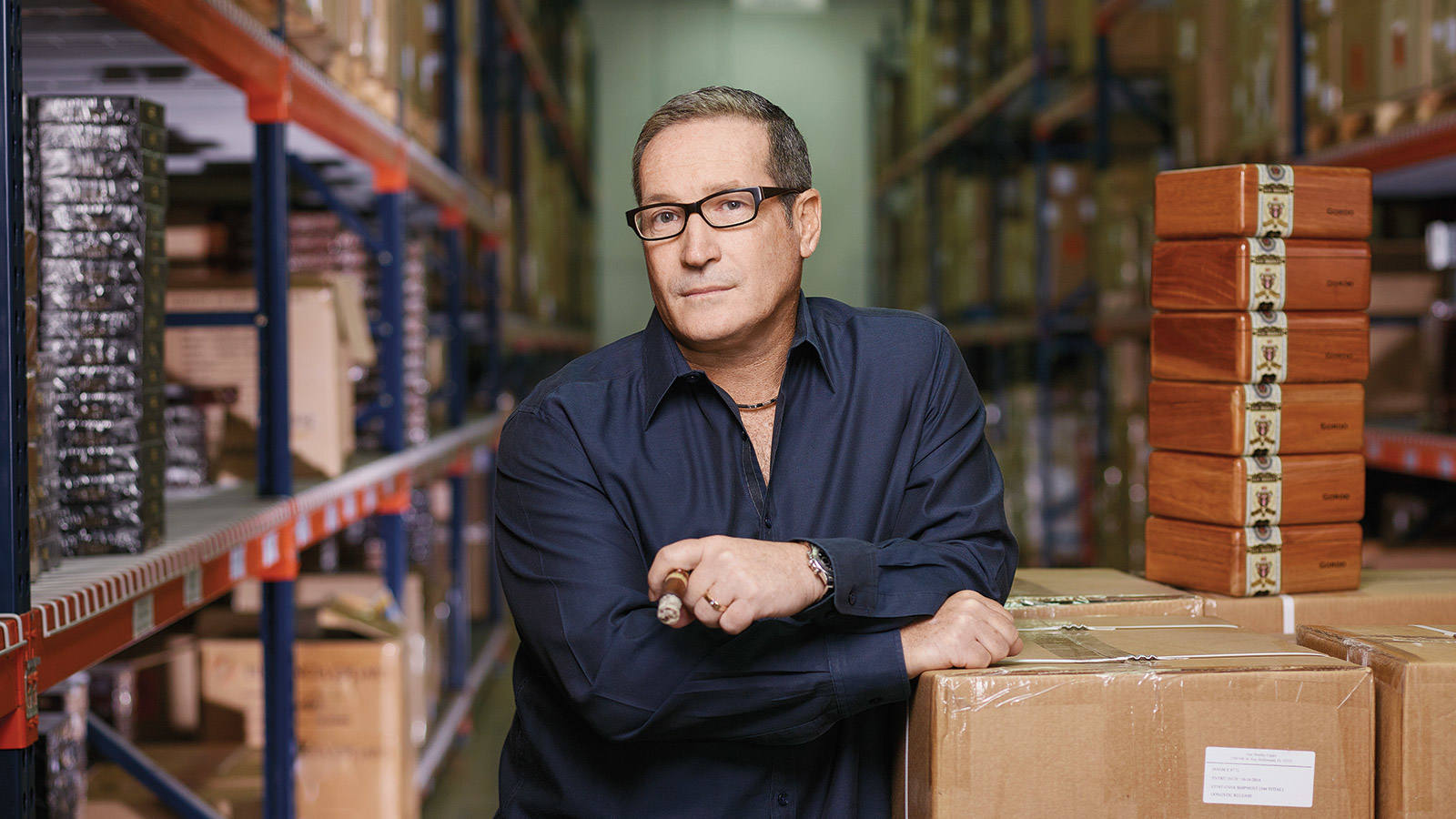 January 6, 2012, 10 A.M. A button is pressed in New York City and a copper, gold and blue cigar band appears on the screens of a waiting world. A minute later the phones begin to ring in the Dania, Florida, headquarters of Alec Bradley cigars. The small company's Alec Bradley Prensado Churchill has just been named by Cigar Aficionado magazine and everyone seems to want one. Nothing will ever be the same again.Orders flood in for the box-pressed smoke, which receives a rating of 96 points. Alec Bradley's owner, Alan Rubin, is overjoyed. His sales boom, going up more than 70 percent in a single year. But as 2012 draws to a close he discovers a problem while he is handing out one of his award-winning smokes to a consumer. The cigar is soft, almost unsmokeable. And it is not alone.Rubin's discovery exposed production flaws throughout much of his product line, and set him on a difficult path to regain the quality of his product and the trust of the consumer. Rubin sat down recently in New York City with executive editor David Savona for a frank and detailed discussion about what went wrong with his cigars and how he and his company addressed the problem.Savona: Let's talk about your Alec Bradley Prensado Churchill, which was named Cigar Aficionado's Cigar of the Year for 2011. The highest accolade we give. Ninety-six-point rating, fantastic rating. But it wasn't all roses after that. Things happened.
Rubin: Yes. Let me give you a few years prior. Seven years prior to us getting the No. 1, we had grown about 22 to 25 percent a year, year over year, for about seven years.Q: That's extraordinary.
A: At one point I was very happy. I felt that we were one of the fastest growing cigar companies in the world. Everything was going very nicely, and we were building a reputation, but truth be told I think a lot of cigar smokers still didn't know who Alec Bradley was. Even with that type of growth. The people who really knew cigars knew the brand. We had gotten some great ratings, [on] Tempus and Select Cabinet Reserve, and we started to get some level of credibility and people started to pick us up. And we were very comfortable in that manageable level of growth. We had good goals, and we knew how to manage those goals.Q: How many cigars were you making before you were named Cigar of the Year?
A: We were doing just over three million [units]. And we were probably approaching the four million mark. We had a lot of work to do, to get people to know who we were, but it was fun. It was exciting, and it was truly a great journey. We were seeing levels of success and that always propels me and a company to want to do more. It was great. We had our problems, like every other company. We still had some growing problems, knowing who to hire, making sure we had the right tobaccos, we spent a lot of time down at the factories, there every four weeks, five weeks, blending, looking over production—and then things changed.Q: So what changed?
A: Everything changed. Earning Cigar of the Year didn't change who we were, and it didn't change who we were as a company, but it changed how we did business. I think one of the reasons is people liked our small company feel and small company mentality, and the fact that we considered the consumers our friends and the tobacconists our friends. It's very personal for me. Business is very personal for me. And then you get this accolade of the No. 1 cigar and overnight people's perceptions changed.Q: How so?
A: With Alec Bradley, even with those little bits of success, we were kind of flying under the radar, as a company. And then the first week in January of 2012 you're now firmly implanted in the center of the radar screen. People want to know who you are and what you're about. I just personally did not manage the demands that were put on us, and the expectations, the perception of who we were. I did a poor job in managing that. As well as other things.Q: Tell me specifically what happened.
A: Right after it was announced, I think it was 10 o'clock in the morning, at 10:01 the phones started ringing off the hook. You know, we find out at the same time as everyone else. I go on the Internet like everyone else. You can't prepare for this. It's not like I have six months of inventory that we've rolled waiting. It doesn't work that way. People were calling, friends that I had, and they would call and say ‘Give me 25 boxes of Prensado Churchill.' And the truth is if they called at the end of the day we were basically out of inventory. As soon as I said no they said ‘You're not the same company you used to be. I thought we were friends.' I'm never one to want to say no, I always want to say yes. I didn't want to say no. I overpromised. And I hurt a lot of people. And the truth is, we burdened the factory. In that one year we grew 72 percent. Unmanageable. And we put demands on the factory and we didn't have the processes in place.Q: Was that growth all Prensado?
A: No. It had an effect on the entire company. Across all the lines. If you look at how that translates back, we had to dedicate a lot of our production to Prensado. So, therefore, the other brands began to suffer. I had to take production from other products that we had in our portfolio to try and take care of my friends that were looking for the product.Q: How many accounts did you have before being named Cigar of the Year?
A: Solid accounts, probably 1,100. And most of them I had met personally, so they could make a phone call. And where I used to get back to somebody in a day, sometimes it was two weeks before I could call somebody back. And where I used to be down at the factory every four or five weeks, the requests to get me on the road and going in the stores and talking about the product kept me traveling more domestically. I took my eye off the ball. At the factory is where I needed to be.
January 6, 2012, 10 A.M. A button is pressed in New York City and a copper, gold and blue cigar band appears on the screens of a waiting world. A minute later the phones begin to ring in the Dania, Florida, headquarters of Alec Bradley cigars. The small company's Alec Bradley Prensado Churchill has just been named by Cigar Aficionado magazine and everyone seems to want one. Nothing will ever be the same again.Orders flood in for the box-pressed smoke, which receives a rating of 96 points. Alec Bradley's owner, Alan Rubin, is overjoyed. His sales boom, going up more than 70 percent in a single year. But as 2012 draws to a close he discovers a problem while he is handing out one of his award-winning smokes to a consumer. The cigar is soft, almost unsmokeable. And it is not alone.Rubin's discovery exposed production flaws throughout much of his product line, and set him on a difficult path to regain the quality of his product and the trust of the consumer. Rubin sat down recently in New York City with executive editor David Savona for a frank and detailed discussion about what went wrong with his cigars and how he and his company addressed the problem.Savona: Let's talk about your Alec Bradley Prensado Churchill, which was named Cigar Aficionado's Cigar of the Year for 2011. The highest accolade we give. Ninety-six-point rating, fantastic rating. But it wasn't all roses after that. Things happened.
Rubin: Yes. Let me give you a few years prior. Seven years prior to us getting the No. 1, we had grown about 22 to 25 percent a year, year over year, for about seven years.Q: That's extraordinary.
A: At one point I was very happy. I felt that we were one of the fastest growing cigar companies in the world. Everything was going very nicely, and we were building a reputation, but truth be told I think a lot of cigar smokers still didn't know who Alec Bradley was. Even with that type of growth. The people who really knew cigars knew the brand. We had gotten some great ratings, [on] Tempus and Select Cabinet Reserve, and we started to get some level of credibility and people started to pick us up. And we were very comfortable in that manageable level of growth. We had good goals, and we knew how to manage those goals.Q: How many cigars were you making before you were named Cigar of the Year?
A: We were doing just over three million [units]. And we were probably approaching the four million mark. We had a lot of work to do, to get people to know who we were, but it was fun. It was exciting, and it was truly a great journey. We were seeing levels of success and that always propels me and a company to want to do more. It was great. We had our problems, like every other company. We still had some growing problems, knowing who to hire, making sure we had the right tobaccos, we spent a lot of time down at the factories, there every four weeks, five weeks, blending, looking over production—and then things changed.Q: So what changed?
A: Everything changed. Earning Cigar of the Year didn't change who we were, and it didn't change who we were as a company, but it changed how we did business. I think one of the reasons is people liked our small company feel and small company mentality, and the fact that we considered the consumers our friends and the tobacconists our friends. It's very personal for me. Business is very personal for me. And then you get this accolade of the No. 1 cigar and overnight people's perceptions changed.Q: How so?
A: With Alec Bradley, even with those little bits of success, we were kind of flying under the radar, as a company. And then the first week in January of 2012 you're now firmly implanted in the center of the radar screen. People want to know who you are and what you're about. I just personally did not manage the demands that were put on us, and the expectations, the perception of who we were. I did a poor job in managing that. As well as other things.Q: Tell me specifically what happened.
A: Right after it was announced, I think it was 10 o'clock in the morning, at 10:01 the phones started ringing off the hook. You know, we find out at the same time as everyone else. I go on the Internet like everyone else. You can't prepare for this. It's not like I have six months of inventory that we've rolled waiting. It doesn't work that way. People were calling, friends that I had, and they would call and say ‘Give me 25 boxes of Prensado Churchill.' And the truth is if they called at the end of the day we were basically out of inventory. As soon as I said no they said ‘You're not the same company you used to be. I thought we were friends.' I'm never one to want to say no, I always want to say yes. I didn't want to say no. I overpromised. And I hurt a lot of people. And the truth is, we burdened the factory. In that one year we grew 72 percent. Unmanageable. And we put demands on the factory and we didn't have the processes in place.Q: Was that growth all Prensado?
A: No. It had an effect on the entire company. Across all the lines. If you look at how that translates back, we had to dedicate a lot of our production to Prensado. So, therefore, the other brands began to suffer. I had to take production from other products that we had in our portfolio to try and take care of my friends that were looking for the product.Q: How many accounts did you have before being named Cigar of the Year?
A: Solid accounts, probably 1,100. And most of them I had met personally, so they could make a phone call. And where I used to get back to somebody in a day, sometimes it was two weeks before I could call somebody back. And where I used to be down at the factory every four or five weeks, the requests to get me on the road and going in the stores and talking about the product kept me traveling more domestically. I took my eye off the ball. At the factory is where I needed to be.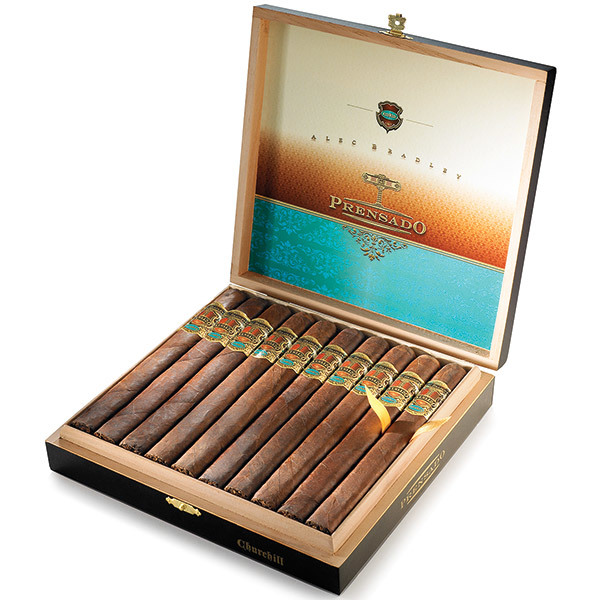 Q: You made more Prensados. Did the product begin to suffer?
A: Yes. Again, we were now managing relationships. And expectations. And we were failing there. But where we really failed, there was a period of time—probably from mid-2012 for the next year and a half—we realized we didn't have some processes in place. We were making some bad cigars that were making it to the marketplace. It was kind of a perfect storm. The cigars were made [under contract] at Raices Cubanas, and we take the majority of the production there. The owner, Romay Endemaño, had just taken ill, probably a year, year and a half before. And his son Hugo came in. All of a sudden I'm putting another two million cigars into production, and they couldn't handle it. Hugo didn't have the experience at the time. Romay wasn't on the floor running production. So when things were going wrong, we didn't know how to fix it. We did everything we could to work on it, but we didn't know how to fix the problem. Romay was the guy, but medical issues came up and he couldn't be there.
Q: You made more Prensados. Did the product begin to suffer?
A: Yes. Again, we were now managing relationships. And expectations. And we were failing there. But where we really failed, there was a period of time—probably from mid-2012 for the next year and a half—we realized we didn't have some processes in place. We were making some bad cigars that were making it to the marketplace. It was kind of a perfect storm. The cigars were made [under contract] at Raices Cubanas, and we take the majority of the production there. The owner, Romay Endemaño, had just taken ill, probably a year, year and a half before. And his son Hugo came in. All of a sudden I'm putting another two million cigars into production, and they couldn't handle it. Hugo didn't have the experience at the time. Romay wasn't on the floor running production. So when things were going wrong, we didn't know how to fix it. We did everything we could to work on it, but we didn't know how to fix the problem. Romay was the guy, but medical issues came up and he couldn't be there.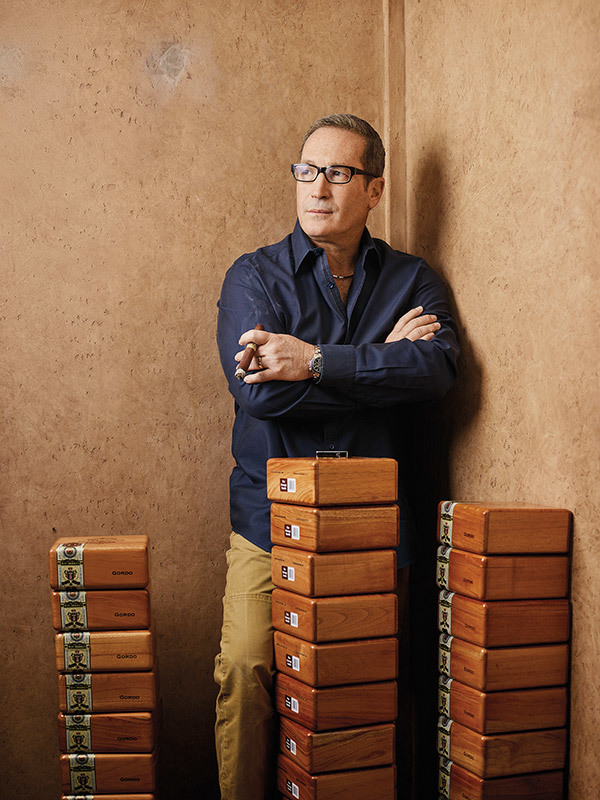 Q: How many cigars in a shipment?
A: Some of those shipments were 180,000 or 200,000 cigars. And you don't know if maybe they're a little moist, or they're underfilled. So we ended up buying these high-end humidity gauges to test the humidity of the cigar. There were a lot of questions and there weren't enough answers.Q: Were retailers calling you with complaints?
A: Yes. And there's a long tail on that animal. It doesn't go away when you start making good cigars again. Now we are coming into 2013 and we realize we have a problem but we don't necessarily have a solution. We started spending more time [in Honduras] and really questioning every process. And sometimes there's a language barrier, in terms of the interpretation. Communication was tough.Q: So what did you do?
A: We literally went down and questioned every single process, from fertilization in planting to the drying, the fermentation, the tobacco preparation, all the way through what was making it onto the floor. Was the moisture content right? We put additional quality control pieces in place, we got rid of supervisors, more supervisors, better training, we spent a lot of time retooling. But that had to come from the heart. You had to care about everybody.Q: It was like a detective process.
A: We literally questioned every part of the process.Q: You started this at the beginning of 2013. How long until you trusted the factory again?
A: Around the middle of 2014, I'm spot-checking cigars. And I kind of realize just to myself, ‘These cigars are good, they're burning perfectly, the ash is holding on, they tasted great and they performed great.' It was getting better all along, but mid-2014 I was like, ‘We got it.' This is who we are, this is who we were. I turned to Ralph and I said, ‘We're back.' This is what these cigars are supposed to taste like.Q: What kind of damage was done to the company in the interim?
A: People lost confidence in us. And rightfully so. And by the way all this falls on me. At the end, I'm the one who has to answer for those problems that we had. I believe success is a team game, but the mistakes and the failures we had really fall on me. I just didn't see it. I took my eye off the ball. It was our attention to detail prior that helped us grow as we did.Q: And sales?
A: The year 2014 was a little bit down for us. Not much. We made it up in other areas. We still had cigars—Black Market, Tempus Maduro, American Classic, Sun Grown—that were performing. People still had great experiences. It wasn't every cigar that we put out. There were pieces. It was enough of our portfolio that people got turned off. We had consumers tell us for awhile I was having trouble with your cigars, but now I taste the difference.Q: Raices Cubanas still makes Prensado for you and many other cigars. When you went through these issues, did you ever think of leaving Raices Cubanas?
A: Nope.Q: Why not?
A: Because the Endemaño family is my family. Their intent was not to do bad things. Their intent was to do great things. They never walked out on me once. They never said we're looking at other business and we don't need this. They said let's get through this together.Q: You once said your cigars represent that one hour of someone's leisure time.
A: Best hour of their day. We want to be a part of the best hour of their day. So look back—I was not in a good place. That one hour they were giving to me and I wasn't giving back. It wasn't so extreme. Our production went down some, not a lot. People stuck by us.Q: Do you have confidence in your product again?
A: I do. I couldn't sit here and do this if the cigars weren't right. All the great things that getting Cigar of the Year gives you—I gave you all the stuff that went wrong, but we're now in 35 countries outside of the United States.Q: How many were you in before No. 1?
A: Three or four. As a company, as a brand, as a global brand, we're growing. Without being on the radar screen from getting No. 1, it never would have happened. And it made us better. It made us better because, for us to do the right thing, we had to get better.When your kids' names are on the business, there's a little more pressure. And not just from my wife either. I want to leave the right legacy for my kids, if they choose to come into this business. Alec is currently working with me and I think Bradley wants to when he gets out of college. So I had to make this right. I had to fix this. I didn't have a choice.
Q: How many cigars in a shipment?
A: Some of those shipments were 180,000 or 200,000 cigars. And you don't know if maybe they're a little moist, or they're underfilled. So we ended up buying these high-end humidity gauges to test the humidity of the cigar. There were a lot of questions and there weren't enough answers.Q: Were retailers calling you with complaints?
A: Yes. And there's a long tail on that animal. It doesn't go away when you start making good cigars again. Now we are coming into 2013 and we realize we have a problem but we don't necessarily have a solution. We started spending more time [in Honduras] and really questioning every process. And sometimes there's a language barrier, in terms of the interpretation. Communication was tough.Q: So what did you do?
A: We literally went down and questioned every single process, from fertilization in planting to the drying, the fermentation, the tobacco preparation, all the way through what was making it onto the floor. Was the moisture content right? We put additional quality control pieces in place, we got rid of supervisors, more supervisors, better training, we spent a lot of time retooling. But that had to come from the heart. You had to care about everybody.Q: It was like a detective process.
A: We literally questioned every part of the process.Q: You started this at the beginning of 2013. How long until you trusted the factory again?
A: Around the middle of 2014, I'm spot-checking cigars. And I kind of realize just to myself, ‘These cigars are good, they're burning perfectly, the ash is holding on, they tasted great and they performed great.' It was getting better all along, but mid-2014 I was like, ‘We got it.' This is who we are, this is who we were. I turned to Ralph and I said, ‘We're back.' This is what these cigars are supposed to taste like.Q: What kind of damage was done to the company in the interim?
A: People lost confidence in us. And rightfully so. And by the way all this falls on me. At the end, I'm the one who has to answer for those problems that we had. I believe success is a team game, but the mistakes and the failures we had really fall on me. I just didn't see it. I took my eye off the ball. It was our attention to detail prior that helped us grow as we did.Q: And sales?
A: The year 2014 was a little bit down for us. Not much. We made it up in other areas. We still had cigars—Black Market, Tempus Maduro, American Classic, Sun Grown—that were performing. People still had great experiences. It wasn't every cigar that we put out. There were pieces. It was enough of our portfolio that people got turned off. We had consumers tell us for awhile I was having trouble with your cigars, but now I taste the difference.Q: Raices Cubanas still makes Prensado for you and many other cigars. When you went through these issues, did you ever think of leaving Raices Cubanas?
A: Nope.Q: Why not?
A: Because the Endemaño family is my family. Their intent was not to do bad things. Their intent was to do great things. They never walked out on me once. They never said we're looking at other business and we don't need this. They said let's get through this together.Q: You once said your cigars represent that one hour of someone's leisure time.
A: Best hour of their day. We want to be a part of the best hour of their day. So look back—I was not in a good place. That one hour they were giving to me and I wasn't giving back. It wasn't so extreme. Our production went down some, not a lot. People stuck by us.Q: Do you have confidence in your product again?
A: I do. I couldn't sit here and do this if the cigars weren't right. All the great things that getting Cigar of the Year gives you—I gave you all the stuff that went wrong, but we're now in 35 countries outside of the United States.Q: How many were you in before No. 1?
A: Three or four. As a company, as a brand, as a global brand, we're growing. Without being on the radar screen from getting No. 1, it never would have happened. And it made us better. It made us better because, for us to do the right thing, we had to get better.When your kids' names are on the business, there's a little more pressure. And not just from my wife either. I want to leave the right legacy for my kids, if they choose to come into this business. Alec is currently working with me and I think Bradley wants to when he gets out of college. So I had to make this right. I had to fix this. I didn't have a choice.